Introduction
Imagine stepping into a vehicle that not only drives you from A to B, but also acts as a companion—constantly monitoring its own health, optimizing energy use, anticipating maintenance needs, and adapting to road and traffic conditions in real time.
Such a vehicle is no longer just science fiction. The emergent concept eplus4car represents this paradigm shift: a smart automotive platform combining connectivity, intelligence, sustainability, and safety.
In this article, we will unpack eplus4car in depth: what it is, how it works, its advantages and challenges, and why it could be the backbone of mobility over the next decade.
You’ll get actionable insights, expert-level explanations in plain language, and guidance on how stakeholders—drivers, manufacturers, urban planners—can benefit.
What Is eplus4car?

The term eplus4car (sometimes stylized ePlus4Car) refers to a holistic, intelligent automotive ecosystem. It combines:
- Electric propulsion and energy optimization
- Connected systems with continuous data exchange
- Smart diagnostics, predictive maintenance, and over-the-air updates
- Safety, automation, and driver-assistance functions
- Integration with infrastructure and smart-city networks
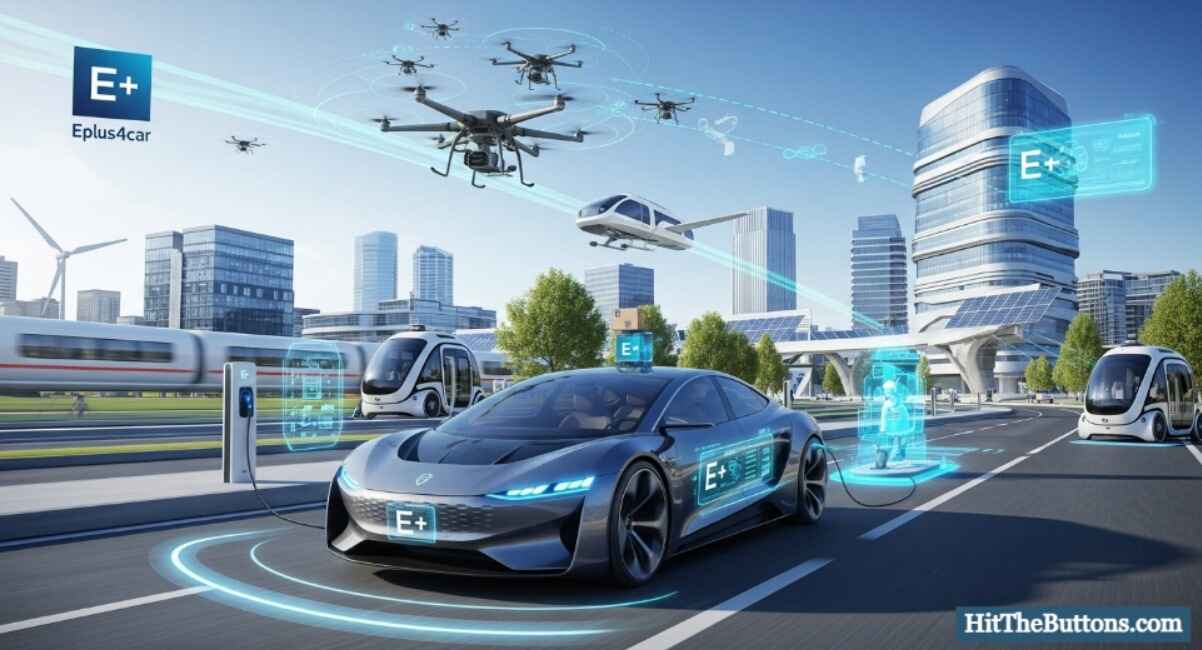
In short: eplus4car is not just a single technology, but a framework for next-gen vehicles that see, think, and adapt. It is the convergence of EVs, IoT, AI, and software-driven mobility.
In many descriptions, eplus4car is framed as an “intelligent automotive ecosystem aimed at making car ownership smarter, safer, and more connected.”
Core Components & Features of eplus4car
Below, we break down the main building blocks that make eplus4car possible. Understanding these is key to assessing its potential.
1. Electric & Energy Management
- Battery & Power Control: In electric/hybrid vehicles, eplus4car optimizes charging, discharge cycles, regenerative braking, and thermal management to prolong battery life and maximize range.
- Energy Analytics: It evaluates usage patterns (e.g. speed, terrain, climate control) to suggest more efficient driving or route changes.
- Smart Charging Schedules: The system may delay or accelerate battery charging based on grid demand, electricity pricing, or environmental incentives (e.g. off-peak rates).
2. Connectivity & Data Layer
- Telematics & IoT: Continuous data streams connect vehicle components (sensors, modules) with cloud backends for monitoring and control.
- Over-the-Air (OTA) Updates: The software stack can evolve—patches, enhancements, new features—without requiring a visit to a service center.
- Vehicle-to-Infrastructure (V2I) & Vehicle-to-Everything (V2X): Communication with traffic signals, road sensors, and other vehicles for real-time route optimization and safety.
3. Diagnostics, Monitoring & Predictive Maintenance
- Real-Time Diagnostics: The platform monitors component metrics (engine, motor, brakes, tires, fluid levels) and alerts the driver or service center before failures.
- Predictive Algorithms: Using historical and live data, the system can predict future wear or failures and schedule maintenance proactively.
- Health Reporting Dashboards: For owners and fleet managers, dashboards show current condition, projected service windows, and cost estimates.
4. Safety & Driver Assistance
- Driver-Assist Features: Adaptive cruise control, lane-keeping assist, automatic braking, and collision warning systems are integral.
- Autonomous Capabilities: Depending on the version, eplus4car may support partial or full self-driving features.
- Emergency Response: In crash events, the system can contact emergency services, send location data, and unlock doors if necessary.
5. User Interface & Experience
- Smart Dashboards: Intuitive displays (touch, voice, AR) that adapt to driver behavior.
- Remote Controls: From a smartphone or wearable, users can lock/unlock, pre-heat, or locate their vehicle.
- Notifications & Alerts: Reminders, energy suggestions, and safety warnings to guide user behavior.
6. Infrastructure & Ecosystem Integration
- Charging Networks: Integration with public and private chargers to manage availability, pricing, and scheduling.
- Renewables & Grid Balance: In some models, car batteries may even act as grid storage assets (vehicle-to-grid, V2G).
- Smart City Connections: Traffic systems, parking services, and mobility platforms tie into eplus4car to coordinate traffic flows, reduce congestion, and optimize urban movement.
Benefits & Value Propositions of eplus4car

Adopting eplus4car offers advantages to multiple stakeholders. Below is a breakdown of benefits for drivers, manufacturers, and cities.
| Stakeholder | Key Benefits |
| Drivers/Owners | Enhanced convenience, energy savings, fewer breakdowns, safety, modern user experience |
| Fleet Operators | Lower downtime, predictive maintenance, centralized monitoring, and cost control |
| Automakers / Tech Providers | Modular upgrade path, data-driven improvements, recurring revenue models (software, subscriptions) |
| Cities / Infrastructure Planners | Smarter traffic flows, lower emissions, demand-based charging, and reduced congestion |
Let’s expand with concrete advantages:
- Lower Total Cost of Ownership (TCO): Efficiency gains, reduced energy consumption, and proactive maintenance reduce both fuel and repair costs.
- Higher Uptime: Predictive maintenance avoids unexpected failures, which is critical for commercial fleets or shared mobility services.
- Scalable Upgrades: Because the system is software-centric, new features can roll out continuously rather than requiring hardware overhauls.
- Better Safety & Reliability: Real-time monitoring and driver assistance systems elevate safety margins.
- Environmental Impact: By optimizing energy use and encouraging electrification, eplus4car contributes to lower emissions and a smaller carbon footprint.
If you are a buyer, fleet manager, or automaker exploring eplus4car, here’s a decision framework:
Key Evaluation Criteria
- Modularity & Upgradability
- Can the system be upgraded via software instead of hardware swaps?
- Does it support plug-in of new modules?
- Can the system be upgraded via software instead of hardware swaps?
- Data & Analytics Capability
- Does the system provide actionable insights (not just raw data)?
- Are predictive and prescriptive models included?
- Does the system provide actionable insights (not just raw data)?
- Security & Privacy Safeguards
- Is data encrypted at rest and in transit?
- Is there secure boot, authentication, intrusion detection?
- Is data encrypted at rest and in transit?
- Integration & Compatibility
- Does it support industry protocols (CAN bus, OBD-II, MQTT, etc.)?
- Can it interface with existing infrastructure (chargers, traffic systems)?
- Does it support industry protocols (CAN bus, OBD-II, MQTT, etc.)?
- Support & Ecosystem
- Is there vendor support, updates, and a developer community?
- Are third-party extensions and app integrations allowed?
- Is there vendor support, updates, and a developer community?
- Cost & ROI Modeling
- What is the total upfront and recurring cost?
- What is the projected payback time from energy savings, reduced downtime, etc.?
- What is the total upfront and recurring cost?
- Regulatory Compliance
- Is the system compliant or certifiable in your country or region (safety, emissions, communications)?
Best Practices for Deployment
To maximize success when rolling out eplus4car systems, consider these tips:
- Pilot First, Scale Gradually: Start with small-scale trials to validate assumptions, then scale up.
- Phased Rollout: Begin with essential features (diagnostics, OTA) before enabling full autonomy or V2X.
- User Training & Onboarding: Provide training materials, tutorials, and real-time support for drivers.
- Continuous Monitoring & Feedback Loops: Use real-world data to refine algorithms and firmware.
- Partnerships & Standards: Align with industry consortia, standard bodies, and infrastructure providers.
- Safety-First Mindset: Fail-safe design, fallback modes, and human override capability are essential.
- Transparent Data Policies: Clearly communicate what data is collected, how it’s used, and how it’s protected
Conclusion
In conclusion, eplus4car is poised to redefine the future of mobility by integrating electric propulsion, smart connectivity, and predictive maintenance into a seamless ecosystem. Its ability to optimize energy use, enhance safety, and improve vehicle longevity offers significant benefits to drivers, fleet operators, and cities alike. With continuous software upgrades and real-time data analytics, eplus4car fosters a more efficient and sustainable transportation model. As the automotive industry shifts toward smarter, more sustainable solutions, eplus4car could become a cornerstone of this evolution, shaping the way we drive, interact with vehicles, and plan our urban spaces for years to come.